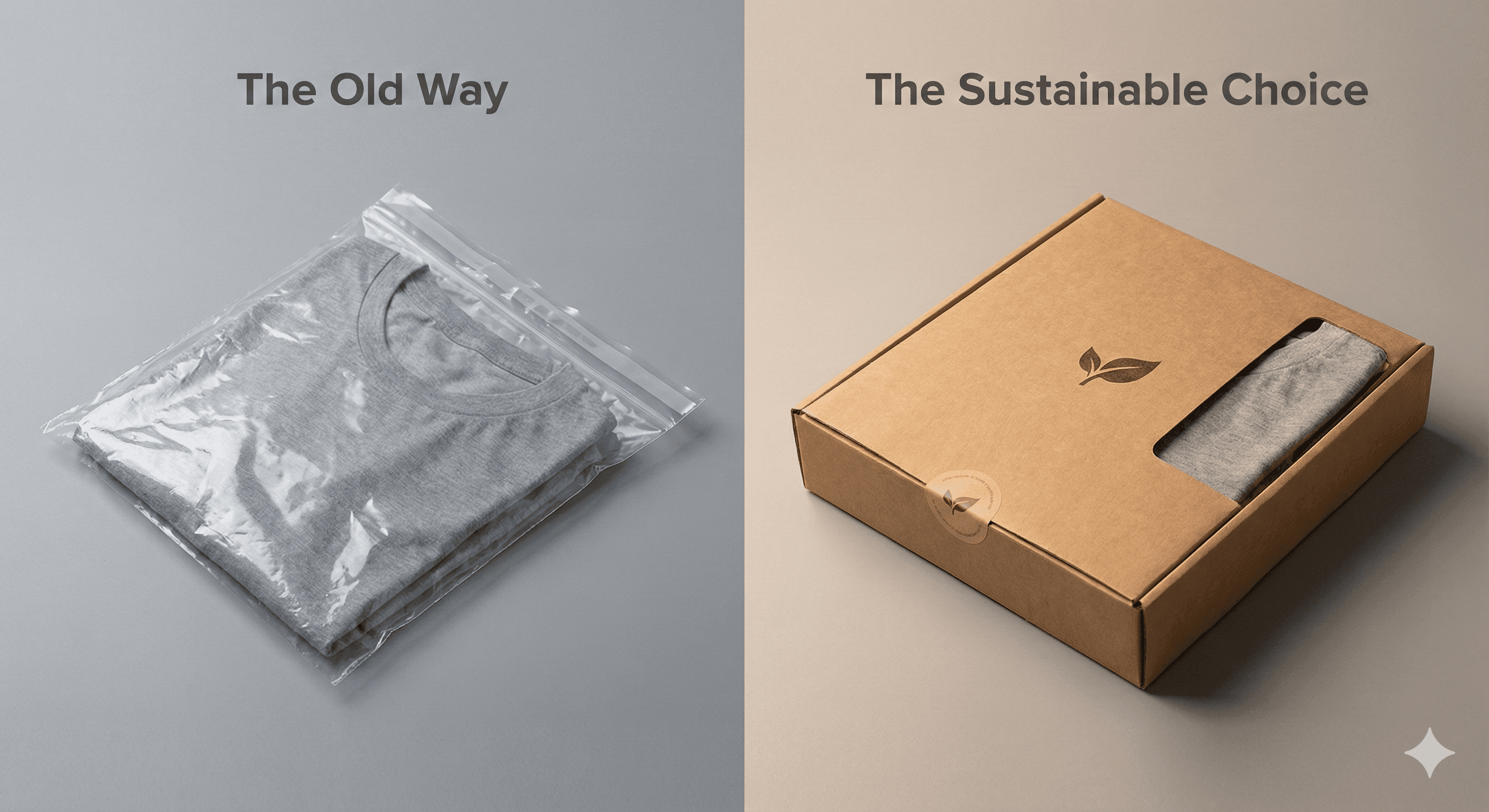
Still using plastic bags? Discover why switching to paper packaging isn't just good for the planet—it's a proven strategy to boost customer loyalty, increase perceived value, and win over the 2025 consumer.
Still using plastic bags? Discover why switching to paper packaging isn't just good for the planet—it's a proven strategy to boost customer loyalty, increase perceived value, and win over the 2025 consumer.
About Author

James Mathews
James Mathews
James Mathews is a landscaping expert with over a decade of experience in creating and maintaining beautiful outdoor spaces. As the founder of Green Valley Landscaping, John is passionate about helping homeowners achieve their landscaping goals through expert advice and personalized service.
About Author
James Mathews
James Mathews is a landscaping expert with over a decade of experience in creating and maintaining beautiful outdoor spaces. As the founder of Green Valley Landscaping, John is passionate about helping homeowners achieve their landscaping goals through expert advice and personalized service.
Paper vs. Plastic: Why Switching to Eco-Friendly Packaging Boosts Customer Loyalty
For decades, the decision between paper and plastic packaging was driven by one factor: cost. Plastic was cheap, lightweight, and everywhere.
But in 2025, the calculation has changed. The question is no longer "What is the cheapest way to wrap my product?" but rather, "What does my packaging say about my brand?"
While plastic might save you pennies in the short term, it could be costing you customers in the long run. As the "Paper vs. Plastic" debate reaches a tipping point, businesses that switch to sustainable paper alternatives are seeing a measurable boost in customer loyalty.
Here is why ditching the plastic is one of the smartest marketing moves you can make this year.
The "Guilt-Free" Purchase Experience
Modern consumers are hyper-aware of their environmental footprint. When a customer receives a package drowning in bubble wrap and plastic tape, it creates a moment of "waste guilt." They have to figure out how to dispose of it, and they feel bad about the trash they are generating.
Paper packaging removes this friction. When a customer unpacks an order wrapped in honeycomb paper, sealed with water-activated tape, and placed in a recyclable kraft box, the experience feels clean and responsible. You are validating their decision to shop with you by aligning with their values.
The Loyalty Factor: Customers return to brands that make them feel good about themselves. Removing the "trash guilt" eliminates a psychological barrier to re-ordering.
Perceived Value: The "Premium" Effect
There is a tactile difference between plastic and paper that subconsciously affects how we value a product.
Plastic feels disposable, cheap, and mass-produced.
Paper feels organic, crafted, and intentional.
Think about the difference between a fast-food burger wrapped in foil versus a gourmet sandwich wrapped in grease-proof butcher paper. The material itself sets the expectation for quality.
By switching to high-quality paper bags or boxes, you automatically elevate the perceived value of your product. A customer is far more likely to post an "unboxing" video of a product in a beautiful, branded paper kit than one in a grey poly mailer.
Future-Proofing Against Regulation
Customer loyalty also depends on consistency. With governments globally—and specifically in regions like the EU and parts of Asia—cracking down on single-use plastics, businesses relying on plastic face a rocky road of bans and taxes.
Switching to paper now shows your customers that you are a forward-thinking brand. You aren't just reacting to laws; you are leading the charge. This builds trust. Customers want to rely on brands that are stable and responsible, not those scrambling to find compliant packaging at the last minute.
Paper: The Champion of Recyclability
Let’s be honest: recycling plastic is confusing. Is it Type 1? Type 5? Can this film be recycled curbside? Often, confused consumers just throw it in the trash.
Paper, however, is the champion of the circular economy.
It’s Universally Understood: Everyone knows how to recycle a cardboard box or a paper bag.
High Recovery Rates: Paper has some of the highest recycling rates of any material in the world.
When you use paper, you are making your customer’s life easier. You aren't giving them a chore; you are giving them a simple, guilt-free disposal method.
Making the Switch (It’s Easier Than You Think)
Many small businesses fear that switching to paper means sacrificing durability or breaking the bank. That is a myth.
Durability: Modern multi-ply paper bags and reinforced mailers are incredibly tough and weather-resistant.
Cost: When you factor in the marketing value (free social media shares) and customer retention, paper often delivers a higher ROI than cheap plastic.
Conclusion
In the battle of Paper vs. Plastic, paper wins on almost every metric that matters to the modern consumer: sustainability, aesthetics, and ease of disposal.
Your packaging is the first physical touchpoint a customer has with your brand. Don't let that moment be defined by a piece of cheap plastic. Switch to sustainable paper packaging and watch your one-time buyers turn into loyal brand advocates.
Paper vs. Plastic: Why Switching to Eco-Friendly Packaging Boosts Customer Loyalty
For decades, the decision between paper and plastic packaging was driven by one factor: cost. Plastic was cheap, lightweight, and everywhere.
But in 2025, the calculation has changed. The question is no longer "What is the cheapest way to wrap my product?" but rather, "What does my packaging say about my brand?"
While plastic might save you pennies in the short term, it could be costing you customers in the long run. As the "Paper vs. Plastic" debate reaches a tipping point, businesses that switch to sustainable paper alternatives are seeing a measurable boost in customer loyalty.
Here is why ditching the plastic is one of the smartest marketing moves you can make this year.
The "Guilt-Free" Purchase Experience
Modern consumers are hyper-aware of their environmental footprint. When a customer receives a package drowning in bubble wrap and plastic tape, it creates a moment of "waste guilt." They have to figure out how to dispose of it, and they feel bad about the trash they are generating.
Paper packaging removes this friction. When a customer unpacks an order wrapped in honeycomb paper, sealed with water-activated tape, and placed in a recyclable kraft box, the experience feels clean and responsible. You are validating their decision to shop with you by aligning with their values.
The Loyalty Factor: Customers return to brands that make them feel good about themselves. Removing the "trash guilt" eliminates a psychological barrier to re-ordering.
Perceived Value: The "Premium" Effect
There is a tactile difference between plastic and paper that subconsciously affects how we value a product.
Plastic feels disposable, cheap, and mass-produced.
Paper feels organic, crafted, and intentional.
Think about the difference between a fast-food burger wrapped in foil versus a gourmet sandwich wrapped in grease-proof butcher paper. The material itself sets the expectation for quality.
By switching to high-quality paper bags or boxes, you automatically elevate the perceived value of your product. A customer is far more likely to post an "unboxing" video of a product in a beautiful, branded paper kit than one in a grey poly mailer.
Future-Proofing Against Regulation
Customer loyalty also depends on consistency. With governments globally—and specifically in regions like the EU and parts of Asia—cracking down on single-use plastics, businesses relying on plastic face a rocky road of bans and taxes.
Switching to paper now shows your customers that you are a forward-thinking brand. You aren't just reacting to laws; you are leading the charge. This builds trust. Customers want to rely on brands that are stable and responsible, not those scrambling to find compliant packaging at the last minute.
Paper: The Champion of Recyclability
Let’s be honest: recycling plastic is confusing. Is it Type 1? Type 5? Can this film be recycled curbside? Often, confused consumers just throw it in the trash.
Paper, however, is the champion of the circular economy.
It’s Universally Understood: Everyone knows how to recycle a cardboard box or a paper bag.
High Recovery Rates: Paper has some of the highest recycling rates of any material in the world.
When you use paper, you are making your customer’s life easier. You aren't giving them a chore; you are giving them a simple, guilt-free disposal method.
Making the Switch (It’s Easier Than You Think)
Many small businesses fear that switching to paper means sacrificing durability or breaking the bank. That is a myth.
Durability: Modern multi-ply paper bags and reinforced mailers are incredibly tough and weather-resistant.
Cost: When you factor in the marketing value (free social media shares) and customer retention, paper often delivers a higher ROI than cheap plastic.
Conclusion
In the battle of Paper vs. Plastic, paper wins on almost every metric that matters to the modern consumer: sustainability, aesthetics, and ease of disposal.
Your packaging is the first physical touchpoint a customer has with your brand. Don't let that moment be defined by a piece of cheap plastic. Switch to sustainable paper packaging and watch your one-time buyers turn into loyal brand advocates.
Paper vs. Plastic: Why Switching to Eco-Friendly Packaging Boosts Customer Loyalty
For decades, the decision between paper and plastic packaging was driven by one factor: cost. Plastic was cheap, lightweight, and everywhere.
But in 2025, the calculation has changed. The question is no longer "What is the cheapest way to wrap my product?" but rather, "What does my packaging say about my brand?"
While plastic might save you pennies in the short term, it could be costing you customers in the long run. As the "Paper vs. Plastic" debate reaches a tipping point, businesses that switch to sustainable paper alternatives are seeing a measurable boost in customer loyalty.
Here is why ditching the plastic is one of the smartest marketing moves you can make this year.
The "Guilt-Free" Purchase Experience
Modern consumers are hyper-aware of their environmental footprint. When a customer receives a package drowning in bubble wrap and plastic tape, it creates a moment of "waste guilt." They have to figure out how to dispose of it, and they feel bad about the trash they are generating.
Paper packaging removes this friction. When a customer unpacks an order wrapped in honeycomb paper, sealed with water-activated tape, and placed in a recyclable kraft box, the experience feels clean and responsible. You are validating their decision to shop with you by aligning with their values.
The Loyalty Factor: Customers return to brands that make them feel good about themselves. Removing the "trash guilt" eliminates a psychological barrier to re-ordering.
Perceived Value: The "Premium" Effect
There is a tactile difference between plastic and paper that subconsciously affects how we value a product.
Plastic feels disposable, cheap, and mass-produced.
Paper feels organic, crafted, and intentional.
Think about the difference between a fast-food burger wrapped in foil versus a gourmet sandwich wrapped in grease-proof butcher paper. The material itself sets the expectation for quality.
By switching to high-quality paper bags or boxes, you automatically elevate the perceived value of your product. A customer is far more likely to post an "unboxing" video of a product in a beautiful, branded paper kit than one in a grey poly mailer.
Future-Proofing Against Regulation
Customer loyalty also depends on consistency. With governments globally—and specifically in regions like the EU and parts of Asia—cracking down on single-use plastics, businesses relying on plastic face a rocky road of bans and taxes.
Switching to paper now shows your customers that you are a forward-thinking brand. You aren't just reacting to laws; you are leading the charge. This builds trust. Customers want to rely on brands that are stable and responsible, not those scrambling to find compliant packaging at the last minute.
Paper: The Champion of Recyclability
Let’s be honest: recycling plastic is confusing. Is it Type 1? Type 5? Can this film be recycled curbside? Often, confused consumers just throw it in the trash.
Paper, however, is the champion of the circular economy.
It’s Universally Understood: Everyone knows how to recycle a cardboard box or a paper bag.
High Recovery Rates: Paper has some of the highest recycling rates of any material in the world.
When you use paper, you are making your customer’s life easier. You aren't giving them a chore; you are giving them a simple, guilt-free disposal method.
Making the Switch (It’s Easier Than You Think)
Many small businesses fear that switching to paper means sacrificing durability or breaking the bank. That is a myth.
Durability: Modern multi-ply paper bags and reinforced mailers are incredibly tough and weather-resistant.
Cost: When you factor in the marketing value (free social media shares) and customer retention, paper often delivers a higher ROI than cheap plastic.
Conclusion
In the battle of Paper vs. Plastic, paper wins on almost every metric that matters to the modern consumer: sustainability, aesthetics, and ease of disposal.
Your packaging is the first physical touchpoint a customer has with your brand. Don't let that moment be defined by a piece of cheap plastic. Switch to sustainable paper packaging and watch your one-time buyers turn into loyal brand advocates.



Other Blogs
Other Similar Blogs
Your go-to destination for insightful articles, tips, and inspiration on all things landscaping and outdoor living
Other Blogs
Other Similar Blogs
Your go-to destination for insightful articles, tips, and inspiration on all things landscaping and outdoor living
Other Blogs
Other Similar Blogs
Your go-to destination for insightful articles, tips, and inspiration on all things landscaping and outdoor living